




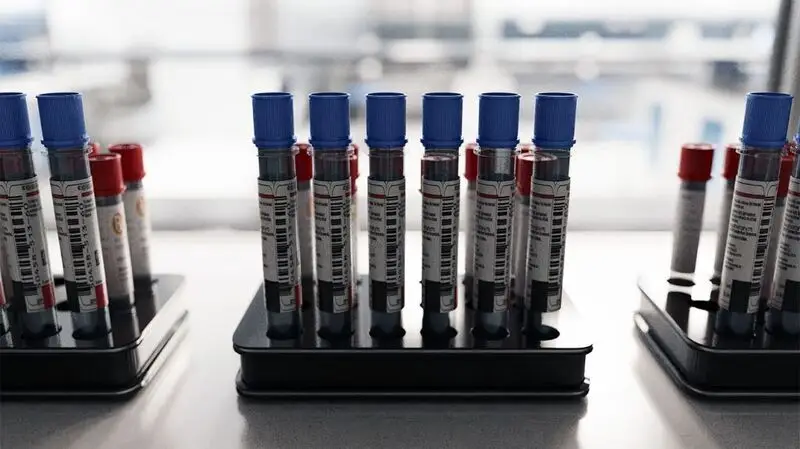
- A study suggests that measuring apolipoprotein B (apoB) may provide a more accurate assessment of cardiovascular risk than traditional cholesterol markers like LDL or non-HDL cholesterol.
- Researchers suggest treatment strategies guided by apoB levels could prevent more heart attacks and strokes over a lifetime compared with current standard approaches.
- Although apoB testing is not yet widely used in routine practice, the study suggests it is not only more effective than standard cholesterol tests, but also cost-efficient.
Roughly 11% of American adults 20 years and older have high total cholesterol levels. While many could benefit from cholesterol medication, evidence notes that
Current routine cholesterol tests typically include a lipid panel to measure total cholesterol levels, which can help to assess a person’s risk of heart disease and stroke. Clinicians can use this information to help guide whether a person may need to initiate statin therapy.
While focusing on cholesterol levels can help with deciding when to start and intensify cholesterol-lowering treatment, these tests may not provide a full picture of a patients risk.
Now, a study published in
Healthcare professionals have long relied on low-density lipoprotein (LDL), often known as “bad cholesterol,” and non-high-density lipoprotein (non-HDL) cholesterol to estimate cardiovascular risk and guide treatment.
However, these measures do not directly count the number of harmful cholesterol particles circulating in the blood.
In contrast,
“For many years, doctors have assessed whether cholesterol-reducing drugs are working by measuring LDL (‘bad’) cholesterol,” lead study author Ciaran Kohli-Lynch, PhD, assistant professor of preventive medicine in the division of epidemiology at Northwestern University Feinberg School of Medicine told Medical News Today.
“People whose LDL remains above 100 mg/dL [milligrams per deciliter] may be eligible for more intensive treatment. Some doctors also look at a patient’s non‑HDL cholesterol, which captures a broader set of harmful particles than LDL.”
“While these measures are useful, research strongly shows that apoB is better at identifying who is at risk, because it counts the total number of harmful particles in the blood. By reflecting this in our computer simulation study, we demonstrated the improved effectiveness of apoB-guided treatment intensification.”
– Ciaran Kohli-Lynch, PhD
“The potential public health impact of apoB goals to intensify cholesterol-reducing medications could be significant,” Kohli-Lynch said to MNT.
“In our modeling, using an apoB goal led to meaningfully fewer heart attacks and strokes compared to LDL and non-HDL goals. When scaled to a national level, our results suggest that apoB-guided intensification could plausibly prevent many thousands of cardiovascular events,” he added.
“At the same time,” he continued, “it is important to note the scope of our analysis. We focused on the role of apoB in guiding treatment intensification among those who are eligible for cholesterol-reducing therapy. We did not study whether apoB testing should replace cholesterol testing to decide who should start cholesterol-lowering treatment: this is an important area for further study.”
However, despite growing evidence, apoB testing is not routinely included in standard cholesterol panels.
The research team suggest this may be partly due to cost and convenience, since measuring apoB typically requires an additional blood test besides the standard cholesterol panel. Other research notes that doctors may not be aware of these tests, or insurance does not cover them.
“There are a couple of reasons why apoB has not yet been widely implemented in routine care,” Kohli-Lynch explained to MNT.
“LDL cholesterol has been the standard measure for cardiovascular risk prediction and cholesterol-lowering treatment for decades. Doctors are familiar with it and changing well-established clinical practice can take time. In addition, apoB is not included in standard cholesterol panels, so ordering the test typically requires an extra step and modest additional costs,” said Kohli-Lynch.
“That said, the landscape for apoB-guided care is beginning to change. The
“They support apoB testing in clinical practice but stop short of recommending apoB as the primary goal to intensify treatment. We hope our study contributes important evidence to inform future guideline updates and wider adoption of apoB-guided care,” Kohli-Lynch told us.
Current guidelines typically
Led by researchers at Northwestern University, the team used a large simulation model representing 250,000 adults eligible for cholesterol-lowering therapy but without existing cardiovascular disease.
They compared three strategies for guiding treatment, which included LDL cholesterol, non-HDL cholesterol, and apoB targets.
Participants whose levels exceeded targets received increasingly intensive treatment, including stronger statins and additional medications.
The study results suggest that over a lifetime, the apoB-guided approach prevented more heart attacks and strokes. Additionally, the approach improved overall population health and delivered benefits at a cost considered good value for healthcare systems
Notably, according to Kohli-Lynch, this is the first comprehensive study to show that apoB-guided care is not only more effective but also cost-effective.
“Prior studies focused on clinical accuracy and not on whether using apoB is cost-effective. This study is different because it asks whether the extra testing costs required to use apoB to guide treatment decisions represent good value for money,” he told MNT.
“While we are not necessarily surprised by the finding, cost-effectiveness analysis provides important information to healthcare payers who are looking to spend their limited resources effectively and efficiently.”
– Ciaran Kohli-Lynch, PhD
Cardiovascular diseases remain the
These findings come at a time when new clinical guidelines are encouraging earlier and more aggressive cholesterol-lowering treatment for many individuals, which makes precise risk assessment increasingly important.
By improving clinicians’ ability to identify high-risk patients, apoB testing could help target treatments more effectively, potentially saving lives while reducing unnecessary healthcare costs.
“The main message we would like clinicians to take away from our research is that apoB is a useful tool to better target intensification of cholesterol-lowering medication,” Kohli-Lynch told MNT.
“Our results suggest that using apoB goals to guide therapy can both improve cardiovascular outcomes compared to LDL and non-HDL cholesterol goals in a way that is both clinically meaningful and cost-effective.”
– Ciaran Kohli-Lynch, PhD
While further real-world adoption and guideline updates may be necessary, this study adds to a growing body of evidence suggesting that apoB may be a superior marker for cardiovascular risk compared with traditional cholesterol measures.