




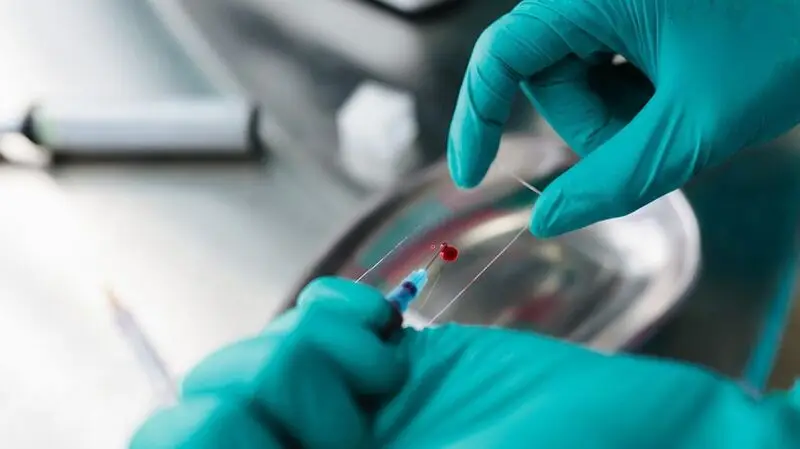
- The American Cancer Society (ACS) updated its colorectal cancer screening guidelines to include new blood-based and at-home stool tests, while continuing to recommend screening for average-risk adults beginning at age 45.
- New screening options include the at-home stool tests Cologuard and ColoSense, both recommended every 3 years, as well as the blood-based test Shield for people who decline other preferred screening methods.
- The ACS states that colonoscopy remains the gold standard for colorectal cancer screening, and a colonoscopy should follow any positive result from a stool or blood-based test within 6 months.
- The guideline changes aim to improve screening participation and reduce colorectal cancer deaths, as colorectal cancer rates continue to rise among adults younger than age 50.
Colorectal cancer is the
Early-onset colorectal cancer, which occurs in adults under 50, is rising globally at an alarming rate in younger adults, with research highlighting that it is the
Previous
Now, the ACS has updated its screening guidelines to expand the range of recommended screening tools, including new blood-based and at-home stool tests designed to improve participation and detect cancer earlier.
Published in
The revised guidance reflects growing concern over rising colorectal cancer rates among younger adults, as well as persistent screening gaps across the United States.
Older evidence indicates that more than 20 million eligible Americans remain unscreened for colorectal cancer, which is approximately one-third of adults who should be tested.
Experts involved in the update suggest that expanding the number of available screening methods may help remove barriers for people who are reluctant or unable to undergo traditional colonoscopy procedures.
Notably, findings from the 2026 Colorectal Cancer Alliance State of Screening Study highlight that only half of Americans know that colorectal cancer screening tests are available at home.
Screening can significantly improve survival outcomes, particularly when the disease is detected early. Evidence suggests that the 5-year survival rate can
By updating their guidance, the ACS hopes more eligible adults will participate in colorectal cancer screening, helping close the screening gap and catch more cancers at an earlier, treatable stage.
When should I start screening?“Adults at average risk of colorectal cancer should begin regular screening at age 45. If they are past the age of 45 and have not started screening, it is important to do so now. Options for colorectal cancer screening include visual tests, of which the most commonly chosen is colonoscopy every 10 years, and stool tests, of which there are options for annual testing or testing every 3 years.”
— Robert Smith, PhD
“With this update, we review an update of an existing multi-target stool-DNA test, which tests for blood in the stool or abnormal DNA, and a new multi-target stool-RNA test, which tests for blood in the stool and abnormal RNA fragments,” Smith said.
“These two tests are recommended to be done every 3 years. We also add to the recommendations a blood-test option, which should only be recommended to individuals who decline or have not completed a high-sensitivity stool-based test or visual exam,” he added.
While colonoscopy remains the
New and updated stool-based tests
The ACS now recommends newer multitarget stool tests that analyze stool samples for molecular markers linked to colorectal cancer.
These include Cologuard, an updated multitarget stool DNA (mt-sDNA) test that checks for DNA markers and hidden blood in stool samples, and ColoSense, a newer multitarget stool RNA (mt-sRNA) test that analyzes RNA markers alongside hemoglobin in stool samples.
Both Cologuard and
Blood-based screening test added
The updated recommendations also include a blood-based screening option, Shield, which detects tumor DNA circulating in the bloodstream.
However, although Shield also has
The ACS suggests that blood-based tests should primarily be for those who decline or do not complete preferred screening methods, such as stool testing or colonoscopy.
Colonoscopy remains the preferred visual exam
The guideline also highlights that a positive result from any blood or stool-based screening test must be followed by a colonoscopy, ideally within 6 months, to complete the screening process.
“If a non-colonoscopy colorectal cancer screening test is positive, it must be followed up with a colonoscopy, or the screening process is not complete,” Smith emphasized to MNT. “It is critically important, but many patients with positive findings on a stool test do not get followed up with a colonoscopy.”
“There are numerous reasons, including not appreciating the importance of the follow-up colonoscopy, difficulty getting an appointment, concerns about costs (it should be covered at no cost to individuals with insurance), the complexity of preparing for colonoscopy, the need to get time off from work, the need to arrange for a chaperone to drive the patient home from the exam, etc. Strong encouragement from the healthcare team is essential,” he explained.
Although new technologies are being added, the updated recommendations continue to support traditional visual screening methods,
At-home stool tests such as fecal immunochemical tests (FIT) and guaiac-based fecal occult blood tests (gFOBT) also remain part of the recommendations.
Which test is best to screen for colorectal cancer?
The ACS reiterates that the best screening test is ultimately the one a person is willing and able to complete.
“Patient preference is very important, and in fact, our guideline recommends that clinicians should not direct patients to a specific test but initially recommend that individuals consider either a visual examination or a stool test,” Smith adds.
“Too often clinicians simply advise patients to get a colonoscopy, and the evidence shows that many individuals do not wish to undergo an invasive test,” he said.
2 types of stool testing“If they would prefer another option, then there are two types of stool testing options: high-sensitivity stool-blood tests or the multi-target stool DNA or RNA tests, which test for both blood and abnormal molecular markers in stool. The multi-target stool DNA tests (the multi-target RNA test is new) have steadily gained uptake over the years and are now the most commonly used stool test among individuals who choose a stool testing option.”
— Robert Smith, PhD
The ACS and its advocacy affiliate, American Cancer Society Cancer Action Network (ACS CAN), state that improving access and affordability will be critical to the success of the updated guidelines.
The screening gap for colorectal cancer remains a persistent barrier that can result in delayed diagnoses, advanced-stage tumors, and higher mortality rates that could have been avoided.
The ACS CAN highlights that insurance coverage and out-of-pocket costs remain major barriers to screening participation, and they will continue to press for policies that eliminate these barriers.
The ACS also notes that the growing colorectal cancer trends in younger populations make earlier and more accessible screening increasingly important.
The guideline update also features a new patient information page that intends to help people better understand colorectal cancer screening options, prevention strategies, and follow-up care.
“Clinicians should stress the burden of disease, the value of early detection for both prevention through removing polyps that may become colorectal cancer and finding colorectal cancer early,” Smith concluded.
Blood tests: pros and cons“For individuals who decline or have not completed a high‐sensitivity stool‐based test or a structural (visual) exam, blood‐based screening tests should be recommended, which are easy and can be completed in the doctor’s office. Clinicians should stress that blood tests do not excel at finding precancers but are effective at finding cancer. They also should stress that the best test is the one you are willing to do.”
— Robert Smith, PhD