




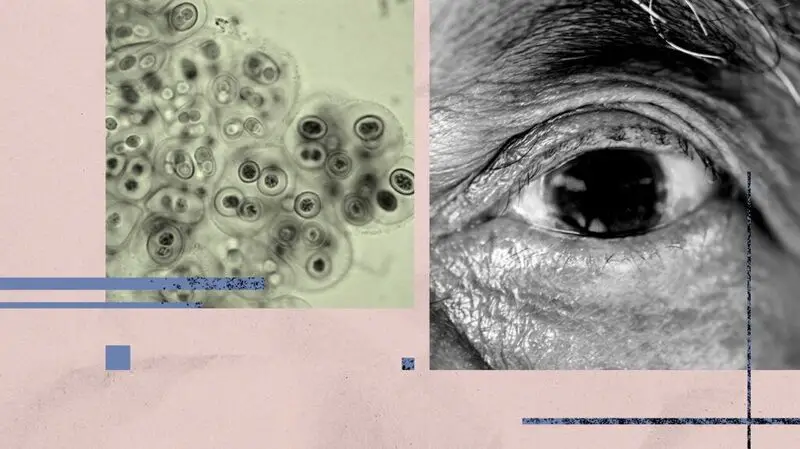
- Research has suggested that changes in the eye may help detect Alzheimer’s disease.
- A new study found that a common type of bacteria that causes sinus infections may stay in the eye for many years, potentially increasing a person’s risk for developing Alzheimer’s disease.
- Scientists believe the identification of these bacteria may help detect and develop new treatment options for Alzheimer’s disease.
We have known for some time that changes in the eye may help detect Alzheimer’s disease — a type of dementia affecting about
Previous research has linked Alzheimer’s disease detection to certain eye conditions, including dry age-related macular degeneration (AMD), cataract, glaucoma, and
Past studies also show that structural changes to the eye, such as
Now, a new study published in the journal
Scientists believe the identification of the bacteria may help create new detection and treatment options for Alzheimer’s disease.
For this study, researchers examined retinal tissue from 104 people ranging from healthy cognition to mild cognitive impairment, to Alzheimer’s disease. Scientists used protein analysis, genetic testing, and advanced imaging to search for levels of the bacteria
“While Chlamydia pneumoniae has been reported in Alzheimer’s disease brains, it was unknown whether it is present in the human retina, whether it associates with Alzheimer’s disease severity across the brain–retina axis, and whether it links to inflammasome-driven inflammatory injury,” Maya Koronyo-Hamaoui, PhD, professor of neurosurgery, neurology, and biomedical sciences at Cedars-Sinai Medical Center, and the senior and corresponding author of this study, told Medical News Today.
“We were prompted by growing evidence that persistent intracellular pathogens can amplify neuroinflammation, and by the retina’s accessibility as a CNS (central nervous system) tissue that could eventually be monitored non-invasively,” she said.
Researchers discovered that retinal tissue samples from people with Alzheimer’s disease had significantly higher levels of Chlamydia pneumoniae, when compared to those with healthy cognition. Scientists also found that the higher the bacterial level, the more severe the cognitive decline.
“The significance is that we see a dose–response relationship: higher retinal and brain bacterial burden aligns with more severe Alzheimer’s pathology and worse cognitive measures,” Koronyo-Hamaoui explained. “This strengthens the biological plausibility that infection-linked inflammation is not just ‘present,’ but may track with disease severity, and it supports the retina as a potentially accessible site to detect a brain-relevant inflammatory signal.”
Koronyo-Hamaoui and her team further validated their findings by studying human neurons in the lab, as well as a mouse model of Alzheimer’s disease. In both, infection with Chlamydia pneumoniae resulted in escalated inflammation, nerve cell death, and cognitive decline.
Researchers also discovered that infection with Chlamydia pneumoniae triggered production of the protein
Researchers also reported that higher levels of the bacteria were most common among participants carrying the
“APOE4 is a major genetic risk factor for [early]-onset Alzheimer’s disease,” Koronyo-Hamaoui said. “Prior work suggests APOE genotype can influence host responses to infection. In our datasets, higher brain and retinal C. pneumoniae burden was more common in APOE ε4 carriers, raising the possibility that genetic risk may interact with infection-related inflammatory pathways.”
“One interpretation is that APOE4 may be associated with higher infectivity rate, less effective clearance, or heightened inflammatory responses to infection, which could amplify downstream neurodegenerative cascades. These observations underscore why mechanism-informed, patient-tailored approaches are likely to be most effective.”
— Maya Koronyo-Hamaoui, PhD
As for the next steps in this research, Koronyo-Hamaoui and her team believe these findings may impact future Alzheimer’s disease detection protocols and treatment options.
“On the detection side, the long-term goal is to develop and validate noninvasive retinal imaging approaches that can flag infection-associated inflammatory stress as a complementary risk/stratification tool alongside blood and brain biomarkers,” she detailed.
“To this end, we want to validate these retinal infection-and-inflammation signatures in larger, well-characterized cohorts and determine how they relate to established Alzheimer’s disease biomarkers and clinical trajectories,” she continued.
“On the treatment side, our data motivate testing whether targeting infection-driven inflammation pathways — potentially including careful evaluation of antimicrobial strategies and inflammasome-modulating approaches — could benefit selected patients, with clinical trials guided by biomarkers to identify who is most likely to respond.”
— Maya Koronyo-Hamaoui, PhD
MNT spoke with Benjamin Bert, MD, a board certified ophthalmologist at MemorialCare Orange Coast Medical Center in Fountain Valley, CA, about this study, who commented that he found this to be an interesting finding in the further investigation of Alzheimer’s disease development.
“Studies like this identify new potential targets for treatment in the earliest stages of the condition or to even allow the ability to minimize the risk factors that can lead to Alzheimer’s development,” Bert explained. “The study appears to reference the already established
“What this study [adds] is the knowledge that these patients who are identified by retinal imaging may have a Chlamydia pneumoniae infection lingering in the brain and in the eye, which could be continuing to trigger an immune response leading to inflammation which can contribute to the development of Alzheimer’s disease.”
— Benjamin Bert, MD
“The next steps would be to really assess the benefit of fully eradicating all of the Chlamydia pneumoniae bacteria from the body and prove that it does provide for a reduction in the amount of people progressing to Alzheimer’s disease or at least reduce the speed and severity of its development,” he added.
MNT also spoke with David I. Geffen, OD, FAAO, director of optometric and refractive services at the Gordon Schanzlin New Vision in La Jolla, CA, about this research.
Geffen commented that this study shows how important routine eye exams are to the general population.
“While we cannot today detect these bacteria in the retina, I am sure we will in the future,” he explained. “We know that amyloids deposit in the optic nerve, and early detection of these types of disorders may lead to early treatment and maybe prevention in the future.”
“Being able to detect this bacterial buildup will give us one more powerful ability to detect early signs of Alzheimer’s disease. Hopefully this will help lead to earlier and better treatments. Next steps will be to develop (an) in office test for finding the bacteria which could be done both effectively and economically.”
— David I. Geffen, OD, FAAO