




- Obesity and cholesterol are two components that affect the risk of more serious health conditions like heart disease.
- Finding strategies to help address obesity and cholesterol is a critical area of medical research.
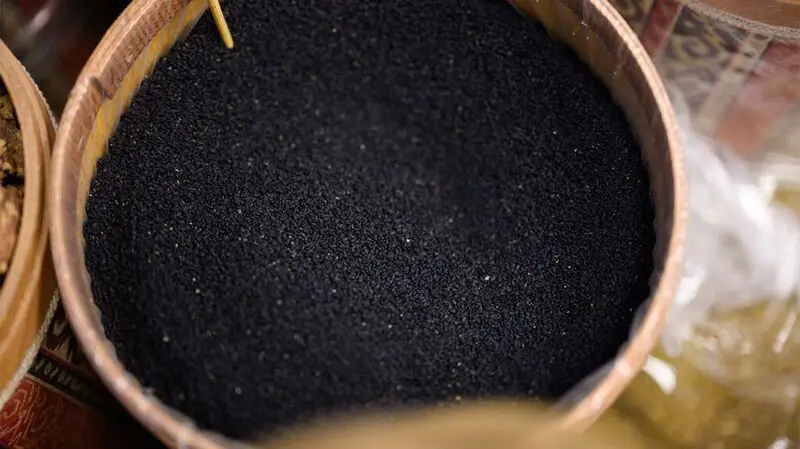
- A recent study suggests that consuming a certain amount of black cumin seed powder daily may help prevent fat cell growth and lower cholesterol levels.
Maintaining a healthy weight and cholesterol levels are crucial components of long-term health and reducing the risk of serious health conditions. For example, maintaining a healthy cholesterol level can help
A
The results suggest a potential benefit of black cumin seed, but also highlight the need for further research in this area.
This research aimed to gain a deeper understanding of how black cumin seed affects fat and cholesterol levels.
First, researchers examined certain properties of black cumin seed extract. They found that black cumin seed extract contained potentially helpful components. They identified that black cumin seed had 23 fatty acids, primarily unsaturated fatty acids, which are possibly beneficial.
The authors also explain that the extract had high total phenolic and flavonoid contents, which “highlight its strong antioxidant potential.” They also identified functional groups that were present, which were associated with thymoquinone, the key bioactive compound in black cumin seed.
Next, the researchers turned to a cellular model to see how black cumin seed extract affected preadipocytes, which are the
They found that the concentrations of black cumin seed extract did not affect the survival of preadipocytes, indicating that it was safe. Based on this, they chose amounts of black cumin seed extract that would work for further experiments.
The researchers then treated the preadipocytes with black cumin seed extract and tested the cells eight days after inducing them to become mature fat cells.
They found that cells treated with black cumin seed extract had a lower buildup of lipids, which are fatty compounds such as triglycerides. They discovered that black cumin seed extract inhibited the activity of a specific enzyme crucial in triglyceride formation. They also noted lower triglyceride levels.
Finally, researchers conducted a randomized controlled trial with 42 participants to examine the effects of black cumin powder on cholesterol levels. Participants either had high or close to high cholesterol levels but were not currently taking medication. They also had body mass indices that indicated that they had obesity or overweight.
The researchers assessed participants’ serum cholesterol levels and how black cumin powder affected their appetite.
They divided participants into an intervention and a control group. The intervention group consumed 5 grams of black cumin seed powder, about the equivalent of a spoonful, daily over an eight-week period. Researchers examined the changes in cholesterol levels that occurred in the groups.
The intervention group saw a decrease in total cholesterol, “bad” cholesterol, and triglycerides, as well as an increase in “good” cholesterol. The control group did not see these benefits.
The intervention group also had an increase in appetite, which was not observed in the control group. Additional testing suggested that the black cumin supplement was the reason for the observed increase in appetite.
The researchers note that their results on appetite indicate that black cumin seed did not adversely impact appetite. Participants also tolerated the intervention well and did not experience significant side effects.
Aaron Chapa, DC, doctor of chiropractic, alternative clinical nutrition practitioner, and founder of Living Well Clinical Nutrition Center, who was not involved in the study, shared the following regarding the overall findings of this research:
“Past research has shown that black cumin seed supports inflammation balance, blood sugar regulation, immune function, cardiovascular health, antioxidant capacity, [and] insulin sensitivity. This study deepens that understanding by showing how these benefits occur:
- It affects gene expression inside fat cells
- It decreases the enzymes needed to build and store fat
- It reduces fat accumulation inside adipocytes
- It improves real human lipid panels in only eight weeks.”
Any research conducted in cells is typically the first step in the research process. Thus, it will take time to see how and if the data applies to people, including safety components.
The research conducted among human participants only lasted eight weeks. It included a small sample size, so work in larger groups will be helpful. There was a smaller proportion of women in the intervention group, and most participants in both groups were between the ages of 20 and 50. The trial was conducted at a single location in Bangladesh, which limits its generalizability and suggests the need for further research in additional groups.
The assessment of appetite was based on participants’ responses to a questionnaire, which may have been incorrect. Researchers advise caution when interpreting the test results for internal consistency of the appetite assessment questionnaire, noting that the observed changes “should not be interpreted as direct evidence of biological or behavioral effects of the intervention.” The effect on appetite might be worth exploring with future research.
Additionally, it’s possible that there were factors researchers didn’t account for that could have contributed to the results, rather than the black cumin seed powder. The authors acknowledge that the control group didn’t have a placebo, so there is a risk for bias.
Christopher Gardner, a professor of medicine and nutrition scientist at Stanford University, who was not involved in the study, noted some critical limitations of the randomized clinical trial.
“A portion of this paper is a randomized trial among ~40 individuals. Typically, that is not a large enough sample size to test a hypothesis about blood cholesterol impacts. The type of analysis they did was to compare blood lipids changes within each of the two groups,” he told to Medical News Today.
“From a geeky point of view, this was inappropriately analyzed. They should have compared between the black cumin and the control group. Had they done so, the likelihood of showing statistical significance would have been decreased. So, I have a problem with the statistical analysis plan,” he said.
The study highlights a distinct benefit of black cumin seed; however, due to the nature of the study, it also indicates the need for more confirmation through additional research.
It’s possible that black cumin seed may become a recommended strategy to help people manage obesity and cholesterol levels. However, it’s important for people to talk with their doctors about supplement use, and it could be a while before black cumin seed becomes a widespread recommendation.
However, the research points to a potentially more natural remedy that could help support this area of human health.
“With each new study, we’re not discovering new magic. We are uncovering the mechanisms behind long-observed wisdom. This study confirms what many cultures, practitioners, and clinicians have witnessed for years. Black cumin seed helps the body regulate fat, balance cholesterol, reduce inflammation, and support detoxification. It is not a cure-all, but it is a powerful helper when paired with smart food choices and healthy rhythms,” Chapa told MNT.