




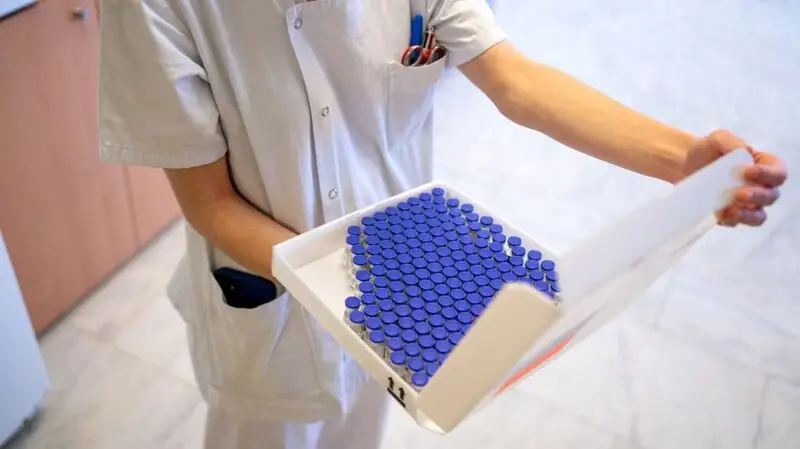
- Over the past few years, there has been a growing research interest in how the shingles vaccine may help protect against other medical conditions.
- There has been a good deal of research focused on the shingles vaccine and its potential role in dementia prevention.
- A new study discovered evidence suggesting receiving the shingles vaccine may help reduce or delay dementia diagnosis in older adults.
Over the past few years, there has been a growing research interest in how the shingles vaccine may help protect against other medical conditions than just herpes zoster, more commonly known as shingles.
For example, previous studies provide evidence that the shingles vaccine may help prevent cardiovascular conditions, such as heart disease and
A study published in January 2026 has even found that the shingles vaccine might help slow biological aging.
Additionally, there has been a good deal of research focused on the shingles vaccine and its potential role in dementia prevention.
For instance, a study published in October 2025 found receiving the shingles vaccine may result in protection against vascular dementia, while other research published in December 2025 reported the vaccine might help lower a person’s dementia risk and slow disease progression.
Now, a new study published in the journal
This new study discovered evidence suggesting receiving the shingles vaccine may help reduce or delay dementia diagnosis in older adults.
For this study, researchers began their research by analyzing health records from almost 230,000 older adults born between 1930 and 1960 living in Ontario, Canada, and registered with a primary care provider.
On September 15, 2016, Ontario launched an immunization program including the live-attenuated single-dose herpes zoster vaccine called Zostavax, for adults between the ages of 65-70.
This allowed researchers to create three different study participant groups:
- participants born before January 1, 1945, and ineligible for the vaccine
- participants born in 1945 who were eligible to receive the vaccine from September through December in 2016
- participants born between January 1, 1946, and September 15, 1951, eligible for the vaccine for about 15.5 months.
“There have been many analyses in electronic health record and medical claims data that have found that receiving a given vaccine is correlated with a reduced risk of dementia in the future,” Pascal Geldsetzer, MD, PhD, assistant professor of medicine in the Division of Primary Care and Population Health at Stanford University in California, and lead author of this study, told Medical News Today.
“These studies have all compared those who go get vaccinated with those who do not. Our study takes a fundamentally different approach and, thus, provides a very different level of evidence,“ Geldsetzer explained.
In medicine, what you need to prove that an intervention, like a medication or a vaccine, works is a randomized trial. What’s so special about our study is that we take advantage of a very similar scenario to a randomized trial,” he told us.
At the study’s conclusion, researchers found that individuals who had been eligible for a free shingles vaccine were less likely to receive a dementia diagnosis over 5.5 years. Their risk was two percentage points lower.
Scientists also observed that new dementia diagnoses among birth cohorts eligible for the shingles vaccine in Ontario were much less common than in the same birth groups in other Canadian provinces that did not have a shingles vaccine program.
“For the first time, we now have evidence that likely shows a cause-and-effect relationship between shingles vaccination and dementia prevention,” Geldsetzer said. “We find these protective effects to be large in size — substantially larger than those of existing pharmacological tools for dementia.”
Researchers also found that this possible dementia protective effect from the shingles vaccine was more statistically significant in women than men.
“This could potentially be due to sex differences in the immune response or in the way in which dementia develops,” Geldsetzer explained. “Women on average have higher antibody responses to vaccination, for example. We also know that both shingles and dementia are more common in women than in men.”
MNT had the opportunity to speak with Peter Gliebus, MD, chief of neurology and director of cognitive and behavioral neurology at Marcus Neuroscience Institute, a part of Baptist Health South Florida, about this study.
Gliebus, who was not involved in the research, commented that his first reaction was one of cautious optimism.
“The findings suggest a potential protective effect of the herpes zoster vaccine against dementia, which is both intriguing and promising,” he explained. “Dementia is a devastating condition with limited treatment options, so any intervention that could prevent or delay its onset is worth exploring further. I would approach these results with caution.”
“The herpes booster vaccine may lower dementia risk by preventing reactivation of the varicella zoster virus, which has been linked to neuroinflammation. Additionally, the vaccine may have broader immunomodulatory effects, enhancing neuroimmune health and reducing systemic inflammation.”
– Peter Gliebus, MD
“For my patients, I would emphasize that while this study is promising, it is not definitive,” Gliebus added. “I would encourage eligible patients to consider the herpes zoster vaccine, not only for its potential benefits in reducing dementia risk but also for its proven ability to prevent shingles and its complications, which can be particularly severe in older adults.”
MNT also spoke with David Cutler, MD, a board-certified family medicine physician at Providence Saint John’s Health Center in Santa Monica, CA, about these research findings.
Cutler pointed out that the Zostavax vaccine is no longer used in the United States, where the newer recombinant Shingrix vaccine is now the norm.
For that reason, it cannot be assumed that the results will be the same from these very different vaccines.
“Another factor limiting [the] applicability of these results to patients here is that these studies looked at people over 80 years old,” he continued. “Current CDC [Centers for Disease Control and Prevention]
“Presently, there are many interventions for preventing cognitive decline, as well as the general aging condition,” Cutler detailed.
“We could be doing a much better job getting our patients to control blood pressure, avoid smoking, get adequate physical exercise, prevent and control diabetes, eat a healthy diet, maintain ideal body weight, keep cholesterol level normal, get enough sleep, limit alcohol consumption, treat depression, avoid social isolation, and avoid traumatic brain injury, which have all been shown to yield positive results in cognitive function and measurements of aging,” he suggested.
“It would be a further advance if the Shingrix vaccine could add to this arsenal of dementia and aging protection,” Cutler added. “It is unknown whether the vaccine itself, the avoidance of shingles, or both might provide these beneficial results.”