




- Two new cases of the often deadly zoonotic Nipah virus have been reported in West Bengal, India.
- A 1998 outbreak of the virus claimed the lives of over 100 people.
- The virus’ unusual modes of transmission make it an unlikely candidate for a worldwide pandemic.
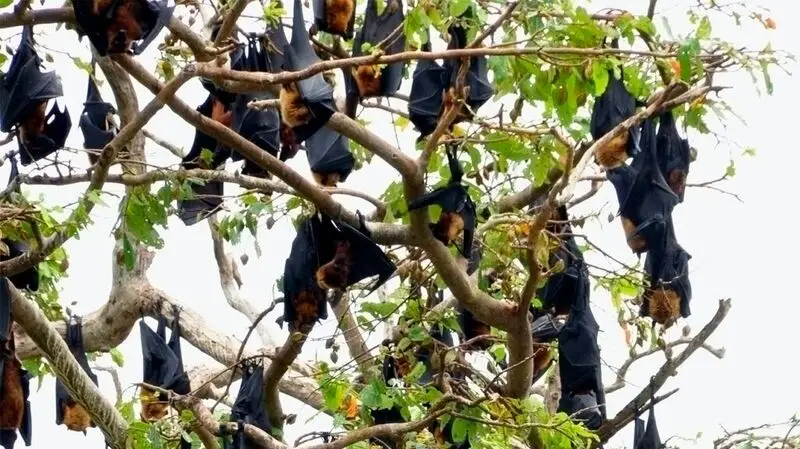
- The virus is carried by fruit bats, or “flying foxes,” that infect a popular delicacy as well as other mammals with whom humans work in the Asia-Pacific region.
In January 2026, India reported
This often deadly zoonotic virus has a fatality rate of between 40% and 75%, raising concerns even when such a small number of cases are reported.
“If you get the Nipah virus, it is bad,” explained William Schaffner, MD, Professor in the Division of Infectious Diseases at Vanderbilt University in Nashville, Tennessee. “It can cause encephalitis with a high mortality rate, and even if you recover, you are likely to have long-term disability.”
Fruit bats from the Pteropodidae family, also known as ‘flying foxes’, are considered the
Transmission of the virus can occur after consuming fruits or fruit products, such as raw date palm juice, contaminated by infected fruit bats. The Nipah virus can also transmit between people through close contact.
At present, the
There is a seasonal aspect to Nipah outbreaks, said Prem Prekash, PhD, research scientist with Meharry Medical College, also in Nashville. They tend to peak between December and May.
“During this winter period,” he said, “bats experience breeding and nutritional stress from scarce natural food sources, causing them to shed more virus and seek human-planted orchards.”
In addition, Prekash pointed out, “Cooler weather in these months prolongs the virus’ survival in the environment, increasing the risk of indirect transmission through contaminated surfaces or fruits.”
And finally, the loss of habitat from mass deforestation is pushing fruit bats into closer proximity with human populations.
The largest known outbreak of the Nipah virus occurred in Malaysia’s Kampung Sungai Nipah Village in 1998. Approximately 300 pig farmers were infected, and
At that time, it was not known that fruit bats were the primary vector for the disease, and it was likely the case, in any event, that a significant number of the farmers’ pigs consumed partially-eaten fruits that had been contaminated by infected bats. To prevent further spread of the virus, millions of pigs were slaughtered.
“That brought the Nipah virus really to public health attention,” said Schaffner. “There have been outbreaks in Malaysia and India and other Southeast Asian countries from time to time.”
“I am sure it occurred before then, but that is the time the virus first was identified and associated with outbreaks. I am sure the virus has been here for, you know, many, many, many years,” he surmised.
Schaffner also noted that serological surveys indicate that pigs are not the only mammals in the Asia-Pacific region that have been infected from fruit bats with the Nipah virus.
In addition to regular handwashing with soap and water, the most effective preventive methods include avoiding contact with bats, pigs, or people carrying the virus, and avoid eating raw date palm sap. If consuming raw date palm sap, it is advisable to boil it first to inactivate the virus.
Authorities in the affected region are netting palm trees in an attempt to keep fruit bats away from the trees when sap is flowing. Protective coverings on sap collection pots are also a good idea.
That having been said, Prekash said to steer clear of “fruits with any suspicious biting or scratch marks that can be contaminated by bat saliva or urine.”
Preventing infection is more difficult for people working with animals who may encounter fruit bats.
“Implement biosecurity measures on farms,” he suggested, “like separating pigs from fruit trees or bat-attracting areas, and quarantine sick animals to prevent amplification of the virus. Use full personal protective equipment (PPE), including gloves, gowns, masks, and eye protection when caring for suspected or confirmed patients to avoid exposure to bodily fluids.”
For medical personnel treating people who have Nipah virus, strict infection controls are definitely warranted. This is one area where human-to-human infection could be of considerable concern, even if it has not been common.
There is currently no approved vaccine for the Nipah virus.
“This is not a common illness. And so there is not a great incentive to create either a vaccine or a specific treatment. Science sometimes follows the financial gradient,” said Schaffner.
Prekash, nonetheless, cited “promising progress being made by The University of Oxford that has launched the world’s first Phase II clinical trial of a Nipah virus vaccine candidate in Bangladesh.”
He also reported “an experimental monoclonal antibody called m102.4, which has shown strong promise in animal studies and limited human use, but [which is] is not yet widely approved or available.”
“More research labs need to pitch in, in order to contribute more potent drug or vaccination [solutions] in the future at large scale,” said Prekash.
“The treatment is entirely symptomatic,” said Schaffner. “There are no specific antiviral agents that work for Nipah.”
Prekash agreed, saying, “The only option right now is intensive supportive care, including oxygen support, mechanical ventilation, management of brain swelling, and fluid balance.”
While there are no specific treatments for Nipah virus at present, an early diagnosis will promote early supportive care, which can help prevent deaths and complications.
Although there are currently no approved drugs or vaccines for Nipah virus infection, the WHO has identified Nipah virus infection as a priority disease for the
Following the global COVID-19 pandemic, the WHO identified a list of high-priority pathogens with the potential to cause future pandemics. The Nipah virus was included on this list, highlighting that Health authorities are aware of the virus’ potential risk.
However, the WHO currently considers the risk of national or global spread of the Nipah virus to be low. People who have Nipah virus are not likely to be asymptomatic and out among other people, or traveling, as was the case, for example, with COVID-19.
“I do not think so,” said Schaffner. “I think these are going to be very unusual events. Sporadic, unusual events.”
As evidence of this, noted Prekash, “The recent Nipah virus outbreak in West Bengal, India — with only two confirmed cases and no further infections detected among 196 contacts — has been effectively contained through contact tracing, testing, and isolation measures.”