




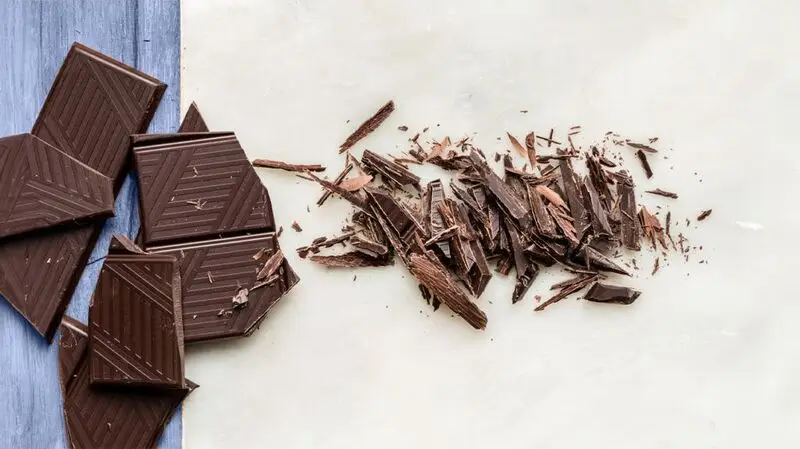
- A new study investigates a compound called theobromine, which is found predominantly in chocolate.
- Participants with the highest blood levels of this compound had signs that their biological age was advancing more slowly.
- Although the results are preliminary, experts believe they warrant further exploration.
Theobromine is found in cocoa and, to a lesser extent, coffee. It is chemically similar to caffeine but does not have such a pronounced stimulant effect.
A new study, published in the journal Aging, measured levels of this compound in people’s blood.
They found that those with the highest levels had epigenetic markers associated with slower biological aging.
Theobromine is a bioactive phytochemical, meaning that it comes from a plant, and it can influence human physiology.
The primary sources of theobromine in the human diet are chocolate and, to a lesser extent, coffee.
This compound is a major component of cocoa beans, comprising around 3.3% by weight. It is molecularly similar to caffeine and shares some of its effects.
However, experts consider theobromine to be a more “gentle” central nervous system stimulant, partly because it does not cross the blood-brain barrier as easily as caffeine.
Theobromine is toxic to humans in high doses, but not at the levels normally consumed, which is why chocolate is safe for humans, thankfully. For cats and dogs, though, it is a different story. Because they metabolize the compound more slowly, it can build up and become toxic more easily.
Chronological age is the number of birthdays you have had since you were born. Biological age, on the other hand, is not bound by time. Rather, it is the physiological condition of your cells, tissues, and organs.
Some people, for instance, may be 80 in chronological years but, if they avoided serious disease, ate a Healthy diet, and exercised regularly throughout their lives, their biological age might be 60.
This can run in the other direction, too. Someone who has not lived a Healthy life might have a biological age of 80 even if they have only traveled around the sun 60 times.
Although there is not a single way to measure biological age, scientists have designed a number of methods that can provide insights. In this study, they used a number of measures, including epigenetics and telomere length.
Our genetics are set in stone. The genes we have as a fetus are the same ones we carry to the grave. However, these genes can be turned “on” or “off” by so-called epigenetic changes.
Medical News Today reached out to Fady Hannah-Shmouni, MD, who was not involved in the study. He is an endocrinologist and geneticist at the University of British Columbia and medical director at Eli Health. To help us understand epigenetics, he explained:
“You can think of your DNA as the hardware of your body, the basic blueprint you’re born with. Epigenetics is like the software settings that tell your cells how to use that blueprint.”
Importantly, the authors of the current study write that “Epigenetic deregulation is a key hallmark of aging.”
They also explain how research shows that alkaloids, like theobromine, can influence epigenetics. Therefore, they decided to investigate whether the health benefits of cocoa and coffee might be attributable to epigenetic changes.
How DNA methylation leads to epigenetic changes
One common epigenetic mechanism is methylation. “DNA methylation is one of the key epigenetic switches,” Hannah-Shmouni told MNT. “Small chemical tags called methyl groups (tiny carbon-and-hydrogen clusters) get attached to DNA.”
“When a gene gets a lot of methyl tags,” he continued, “it often becomes harder to read; the gene is ‘turned down’ or sometimes ‘turned off.’”
In the current study, the scientists used a methodology called GrimAge. According to Hannah-Shmouni, “GrimAge is one of the most advanced and researched epigenetic aging clocks. It predicts biological age, but also something deeper.” He explained how it can also predict:
- Mortality risk
- Disease risk, including heart disease and cancer
- Lifespan-related biomarkers, such as inflammation and smoking exposure
- Rate of aging.
Another biomarker of aging is telomere length.
Telomeres are like the protective caps on the ends of shoelaces. They sit at the end of chromosomes and ensure that their complex 3-D structure does not become unraveled.
As we age, our telomeres grow shorter, and scientists can use this as a marker of biological aging.
For their study, the researchers recruited 1,669 participants, 509 of whom were twins. They analyzed their blood samples for theobromine and other compounds found in coffee and chocolate.
They found that those with the highest levels of theobromine in their blood had signs of slower epigenetic aging than those with the lowest levels. They saw the same pattern in telomere length, although the relationship was weaker.
This difference, the authors explain, may be because these two measures “capture separate aspects of the aging process that do not necessarily overlap.”
When they investigated links between other chocolate and coffee bioactives in the blood, they did not find the same association with biological aging. This suggests that theobromine is responsible for the effect.
Although previous studies have shown that theobromine and related compounds can extend the life span of worms, this is the first study in humans to reach a similar conclusion.
This study is fascinating, not only because it hints that chocolate might slow aging, but also because this widely-consumed compound is relatively safe (for humans).
However, this is not an open-and-shut case; there are many questions left. Although the scientists did assess blood levels of a few compounds, there are many more that they did not measure.
For instance, as the authors explain, coffee contains other health-promoting compounds, like the polyphenol flavan-3-ol.
In this study, they did not measure this compound, but because it is found in chocolate, if someone has high theobromine levels, they may also have high levels of flavan-3-ol.
As the authors explain, “the cardiometabolic and healthy aging benefits of flavan-3-ols are well established.” So, this study could be a red herring. Maybe the slowed biological aging is simply due to higher levels of another compound in chocolate.
Hannah-Shmouni also mentioned that reverse causation might explain the results. “People with slower biological aging may metabolize theobromine differently,” he explained.
However, overall, Hannah-Shmouni thinks that “The findings are intriguing and justify future intervention studies.” Suggesting future directions, he recommends randomized controlled trials with controlled doses of theorbomine, longitudinal studies, and studies that include the measurement of other polyphenols.
This is not a yes-or-no question. Many chocolate products are highly processed and contain a raft of additives, including large amounts of simple sugars.
However, chocolate can still be part of a Healthy diet. MNT contacted Federica Amati, PhD, MPH, MSc, a medical scientist, registered public Health nutritionist, and honorary research fellow at Imperial College London.
“Chocolate has had a bad rap over the years,” she explained. “This is because the majority of chocolate-based products contain a raft of unnecessary ingredients, including emulsifiers and buckets of added sugars.”
Type of chocolate matters“dark chocolate that’s at least 70% cocoa and only contains a handful of ingredients can actually support good health. Cocoa contains a range of healthy, bioactive plant compounds, like polyphenols, which are antioxidants and support a healthy gut microbiome.”
— Federica Amati, PhD
“Aside from phytochemicals, chocolate is also rich in iron, magnesium, copper, manganese, and many other micronutrients,” she added.
So, the bottom line is this: Theobromine might support slower biological aging, but if it does not, you can still enjoy chocolate if you choose the right product.