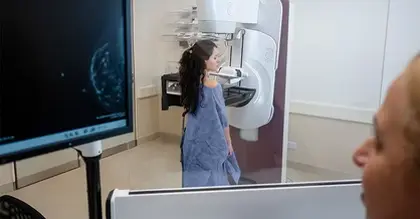





- A newly published perspective article examines the future of preventive healthcare enabled by technological advances.
- The authors argue that multiple relatively minor factors converge to cause serious chronic conditions such as heart disease, type 2 diabetes, and dementia.
- Rather than waiting for signs and symptoms to appear, they believe a tech-led, proactive approach could help people stay healthier for longer.
Published in Cell Systems, a new perspective article calls for a paradigm shift in how medicine approaches chronic disease.
The main thrust of the paper is summarized by the paper’s lead author, Noa Rappaport, PhD, lead author of the paper and associate research professor at the Buck Institute:
“Medicine has traditionally focused on treating disease after symptoms appear. Our goal is to shift toward protecting health by identifying risk earlier and understanding how each person’s biology changes over time.”
If an individual were to stop consuming foods containing vitamin C, they would eventually develop scurvy. This is a rare situation in medicine: One factor causes a disease, and if you address that single factor, the disease process can be reversed.
Instead, many of the greatest threats to health, such as heart disease, type 2 diabetes, and dementia, are much more complex. There is a wide range of additional influences, including lifestyle and environmental factors.
Combined, this complex web conspires across multiple decades, eventually culminating in a disease. This is what the authors describe as the “long tail” of biology.
Most often, a diagnosis and treatment can be made only once the signs and symptoms are observed. The authors write: “Most medical research focuses on changes observed once pathology is already established.”
For instance, they explain that the tests used to diagnose many Health conditions are signs of a body struggling to compensate for a disease state or, worse, are signs of “irreversible damage.”
As the common adage goes, “prevention is better than cure,” but, as the authors argue, this is rarely the case with chronic conditions.
They believe that as technology advances, the medical world needs to develop more effective preventive measures to identify the earliest signs of a developing medical condition and stop it in its tracks.
Type 2 diabetes, a condition that needs no introduction, is diagnosed using measures of blood glucose. To be diagnosed with the condition means that it is already well underway, and the damage caused by excess blood glucose has already begun.
The authors, however, explain how the processes that drive this chronic condition generally start a decade or more earlier, including:
- Subtle shifts in where body fat is laid down.
- A slow rise in inflammation.
- Subtle alterations in the gut microbiome.
- A steady decline in the cells of the pancreas that create insulin.
As the authors write, high blood glucose “is not the cause of type 2 diabetes, but its final shout after years of biological whispers.”
According to them, we should be focusing modern technology on listening to the whispers, rather than waiting for the shouting to begin.
As body systems slowly drift away from a healthy state toward disease, subtle changes can be tracked by scientists. The authors provide examples from diabetes research.
For instance, one study followed people without diabetes for 12 years. They found that changes in the levels of certain amino acids predicted who would go on to develop type 2 diabetes.
Another study, which recruited individuals with prediabetes, found that levels of proteins in the blood 1 year before a diabetes diagnosis were measurably different.
“Emerging technologies now offer the resolution needed to detect these early whispers, opening a path to intervene while systems remain salvageable,” write the authors.
Studies like the two diabetes papers above are hopeful, but, as the new paper explains, there is much more complexity to wrangle.
As it stands, much of modern medicine is built on averages. A doctor makes a diagnosis if a particular biomarker, such as blood glucose levels, is above a predefined diagnostic limit.
This works well, in general, but it is not always sensitive enough to pick up the whispers of biological drift, and interpersonal differences are also very important, as is context. For instance, what’s “normal” for a 71-year-old might be highly unusual for a 21-year-old. There are also differences across sexes, socioeconomic statuses, environmental exposure, and more.
The paper’s authors outline some new testing, biomarkers, and monitoring that may help build up a context-dependent picture, including assessments of biological age. Biological age is a measure of how quickly someone is aging at a physiological and cellular level.
While this and other measures might be useful in the future, they are not yet reliable enough or fully validated to be used meaningfully. One of the reasons for this, they argue, is that they tend to look at the whole body. While this is important, it misses tissue-specific changes, which could begin in just one organ.
Although medical technology is moving incredibly quickly, the lofty goals outlined in this paper are far from being realized.
However, the authors have a keen eye on some techniques that have the potential, when combined, to provide a high-definition view of the long tail of chronic conditions. These technologies include blood-based assays of proteins, metabolites, and extracellular vesicles (EVs).
EVs are small membrane-bound particles that are secreted by a range of cell types. They are involved in cellular communication and transport, and some scientists
Another technique they mention is ultra-sensitive sequencing of circulating DNA fragments, which “can identify cancer-associated mutations at early stages.”
Urine tests might also play a part, being potentially useful for understanding how nutrients are being utilized, and drugs are being metabolized, and even gut microbial activity.
These tests, in combination with analysis of expelled breath, saliva, and the use of wearable sensors, the authors hope, could provide a holistic overview of an individual’s “normal” state. This would, potentially, allow clinicians to identify any early signs of negative changes.
However, this is not a foolproof approach. The more data you collect, the harder it becomes to make sense of. As with so much in the modern world, the authors believe that artificial intelligence (AI) might save the day.
They hope that a sufficiently trained AI model could detect changes, not compared with population averages, but with an individual’s baseline. Then, by scouring the literature, it could begin to understand what this change means for long-term health and disease risk of this particular individual.
“Current comprehensive multi-omic profiling costs $1,000–$5,000 per assessment, excluding interpretation, follow-up testing, and clinical consultation,” explains the paper.
This will keep these advances far from the populations that currently need them most. As with all technology, prices come down over time, but for now, for the vast majority of people, this puts it out of reach.
Overall, this paper provides a fascinating glimpse into a far-flung future, but for now, these technologies are still light-years away from implementation.
“Longevity” has become a buzzword, but only those with incredibly deep pockets can get involved. The authors hope that insurance companies could begin picking up the tab and save in the long run by stopping diseases in their tracks.
While we wait for prices to come down, Medical News Today contacted some experts who weren’t involved in the paper to ask for their best, low-price longevity tips.
Dr. Qingcai Wang, PhD, founder of Five Essences, shared methods for measuring biological aging you can do at home for free. Among his suggestions were:
- Grip strength test: A direct proxy for overall muscle mass and resilience. Weak grip is often the first sign of sarcopenia (muscle loss) and frailty.
- 6-minute walk distance: This is a standard cardiopulmonary test. Walking at least 400 meters in 6 minutes is a critical threshold that predicts equivalent mortality risk to major chronic diseases.
- Nighttime urination: A 7-night sleep diary tracking bathroom trips can reveal more about your aging status than a blood test.
Dr. John La Puma, a board certified internist, founder of ChefMD, and a two-time New York Times bestselling author, summarizes his advice:
“Readers don’t need telomere sequencing. They need a varied intentional outdoor exercise routine, access to and specific intentional time in green spaces (forest bathing, neighborhood parks), and early morning light exposure outside within 60 minutes of waking to anchor their sleep-wake cycle.”
Turner Osla, emeritus professor at the University of Vermont in Burlington, reminds us that, while “coverage of longevity hacks chases exotic tech,” the “actual science points to factors far less flashy but far more empowering.”
“The bad news is that about half of our life span is baked into our genes, but the good news is that the other half is largely governed by a few everyday habits,” he explained.
Tips for a longer life“Not smoking, exercise, avoiding sedentary behavior, adequate high-quality sleep, and eating a predominantly plant‑based, minimally processed diet each independently lowers all‑cause and cardiovascular mortality, and their benefits compound when combined.”
— Turner Osla
No doubt, the future of health tech is exciting. But the most effective advice for now boils down to lifestyle modifications that are as powerful as they are simple.