




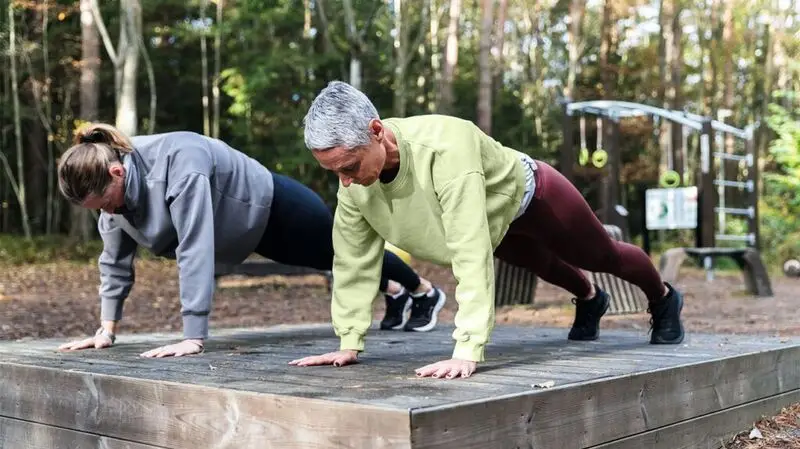
- A new study suggests that artificial intelligence (AI) can analyze abdominal CT scans and identify adults at higher risk of falling as early as middle age.
- Researchers indicate that abdominal muscle quality, or muscle density, is a stronger predictor of fall risk than muscle size.
- These associations were notable not just in older adults but also in people aged 45 and older, indicating fall risk markers may appear earlier than expected.
- The findings emphasize the importance of maintaining good core strength throughout adulthood to potentially reduce future fall risk.
As people age, the risk of falls increases, primarily due to a combination of factors such as declines in balance and strength.
According to the Centers for Disease Control and Prevention (CDC), falls are the leading cause of injury for adults ages 65 and older, affecting roughly
The CDC also estimate that each year, there are roughly
Many strategies are available to help older adults prevent potential accidents from falls. These can include
A recent study, published in Mayo Clinic Proceedings: Digital Health, highlights the importance of core muscle quality, particularly muscle density, as a key indicator of later fall risk.
The findings propose that applying AI to routine abdominal computed tomography (CT) scans could help identify individuals at higher risk of serious falls long before they occur.
A research team from Mayo Clinic collaborated with radiology bioinformatics specialists to train AI algorithms to analyze abdominal CT scans.
Jennifer St. Sauver, PhD, an epidemiologist at Mayo Clinic, Rochester, MN, and lead author of this study, told Medical News Today that this study forms part of a large grant funded by the US National Institute on Aging to try and use AI tools applied to medical images for studies of aging.
“First, we think this study is good example of how applying AI tools to computed tomography (CT) scans that are performed as part of a health care visit can get useful medical information even beyond the main reason for the CT scan,” St. Sauver explained.
“In this particular example, we simultaneously measured muscle, fat, and bone, and found that lower muscle density –in both middle aged and older adults – was associated with an increased risk of falls,” she added.
The study involved nearly 4,000 adults between the ages of 20 to 89, who received abdominal CT scans as part of routine clinical care. The deep learning algorithm measured fat distribution, muscle area and density, and bone area and density.
The findings suggest that muscle density is a much stronger predictor of future falls than muscle size alone. On a CT scan, dense muscle tissue appears darker and tends to be more homogenous with less fat. Previous research has linked muscle density more closely with strength and function than simple size measurements.
The previous studies have shown that core muscles work as stabilizers and are essential for being active and mobile in daily life. These trunk muscles can help people to stabilize themselves when they trip over something.
“Because of these studies, it seems that even when we trip and start to fall, people with dense abdominal muscles may be able to catch and stabilize themselves more easily and prevent the actual fall,” St. Sauver noted.
Instead of focusing on traditional fall risk factors, such as balance, gait tests, and lower limb strength, the research wanted to identify a more routine option to identify risk. The above tests typically form part of a special assessment in older patients, and are not routine for everyone who comes in for a healthcare visit.
“We wanted to know if we could get information from CT images that might help to find people who are at risk of falling, but who are not being directly assessed for fall risk,” St. Sauver told MNT.
The research team expected stronger associations between poorer performance on abdominal muscle measures and a higher incidence of falls in older adults.
However, the team was surprised to find the strength of these associations in middle-aged participants (45 to 64 years) and how strongly those measures predicted fall risk.
“I was personally really surprised to see such a strong association between low muscle density and an increased risk of falls in middle-aged people,” St. Sauver added. “These are people who would not be routinely tested to see whether they have problems with balance, gait, and leg strength.”
Low muscle density in this group was linked with a significantly higher risk of recorded fall over the follow-up period. This suggests that midlife core strength may influence mobility decades later.
Other body composition markers, such as fat or bone measure, did not show clear links with fall risk when adjusted for other factors.
These findings underscore the importance of maintaining a strong core throughout adulthood.
Falls are not only a common cause of injury in older adults, but they also carry substantial health, social and economic costs.
Estimates from the CDC suggest that roughly $50 billion are spent on medical costs related to non-fatal fall injuries, and $754 million on medical costs related to fatal falls.
Identifying people at risk before they experience problems could open the door to earlier interventions. The study highlights that core muscle quality, detectable on standard CT scans, may flag individuals for fall prevention programs, strength training, or lifestyle changes.
“There is a concept right now in radiology called ‘opportunistic screening’ that it would be great to get more information from medical images beyond just the information needed for that specific clinic visit,” St. Sauver told MNT.
“New AI tools are making it possible to study these images in ways we have not been able to in the past, and yes — if we are able to verify that these measures we see on CT images are good markers of physical function, we can develop reports and tools to help identify people who need to be screened for fall risk and to work to improve muscle density.”
– Jennifer St. Sauver, PhD
While further research is necessary to successfully implement AI tools into routine clinical care, the researchers emphasize the importance of maintaining good core strength throughout adulthood.
Integrating core stability and core physical fitness exercises into regular routines could help reduce the risk of falls later in life.
If a person is wanting to improve their abdominal and overall core strength, it is advisable for them to consult a healthcare professional or physiotherapist to tailor a safe plan.
“Older adults can absolutely benefit from strength and physical function training, but need to be carefully assessed to make sure that such training won’t cause injuries,” St. Sauver noted.
“By contrast with physical training, assessing medications that might make people light-headed or dizzy and getting rid of things in their home and environment that might be tripping hazards have been shown to directly prevent falls in older adults,” she told us.
“In middle-aged adults, exercise programs may be more beneficial in directly preventing falls. Multiple studies indicate that improving abdominal strength comes with a whole range of positive results — including less back pain and increased mobility and flexibility in daily life,” the researcher added.
“When we began this study, I was surprised to learn that falls are the leading cause of unintentional injury in all age groups. Our data suggest that better muscle density as early as middle age might help to prevent some of these injuries, and that middle age people can benefit from improving their core muscles,” St. Sauver concluded.