




- There are several possible reasons as to why women are more likely to develop dementia, including a decrease of estrogen which may lead to brain issues.
- Some women take hormone replacement therapy (HRT) to treat menopause symptoms, which over the years doctors have also debated whether or not it increases dementia risk.
- A new study reports finding no evidence that HRT either increases or decreases dementia risk in post-menopausal women.
Researchers estimate that in 2021, about
Past studies show that women have a higher risk of developing dementia than men, making up about two-thirds of all cases.
There are several reasons as to why women are more likely to develop dementia, including longevity — as women tend to live longer than men — as well as a higher genetic risk, and the decrease of estrogen levels during menopause.
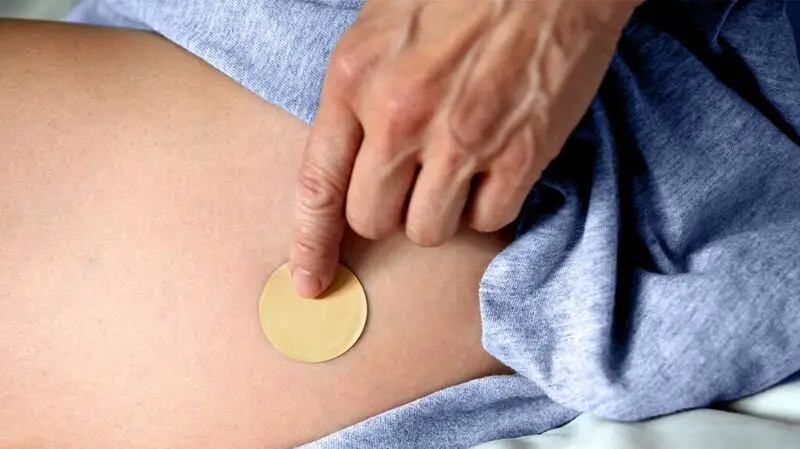
Some women opt to take hormone replacement therapy (HRT) — also known as menopause hormone therapy (MHT) — during menopause to help replace the estrogen they are missing, and potentially alleviate menopause symptoms like hot flashes, night sweats, and mood swings, as well as brain issues like
Over the years, there has been conflicting research findings as to whether or not HRT increases a woman’s risk of developing dementia.
In November 2025, the Food & Drug Administration (FDA) announced it would be removing “black box” warnings for HRT, which included dementia risk.
Now, a new study published in the journal
For this study, researchers analyzed data from 10 previous research studies, encompassing a total of more than 1 million participants.
“Dementia disproportionately affects women, even after accounting for longer life expectancy, yet women’s Health, particularly in midlife, has been under-prioritized in research for far too long,” Melissa Melville, a PhD candidate and aging researcher in the Department of Clinical Health Psychology at the University College London, in the United Kingdom, and lead author of this study, told Medical News Today.
“Continued research is essential to provide women and clinicians with clear, evidence-based guidance, especially around widely used treatments like MHT, where conflicting findings have created uncertainty and mixed messages,” added Melville.
“The World Health Organization (WHO) currently provides no guidance on MHT and cognitive outcomes, leaving a critical gap for women, clinicians and policymakers,” she continued. “Our work will help inform upcoming WHO guidelines on reducing the risk of cognitive decline and dementia, expected later in the year.”
At the study’s conclusion, researchers reported finding no evidence that HRT either increased or decreased dementia risk in post-menopausal women.
Additionally, scientists discovered that these results did not change when taking into consideration factors like when a woman started MHT, how long it was taken for, and the type of taken.
“There has been considerable discussion about whether starting MHT earlier, using it for longer, or using specific formulations might influence dementia risk, but the available evidence is limited and largely observational,” Melville explained.
“We found insufficient data to draw firm conclusions about timing, duration, or type of MHT, reinforcing the conclusion that decisions about MHT should be based on symptom burden and established benefits and risks, rather than dementia prevention.”
– Melissa Melville
“Decisions about starting MHT should be based on symptom burden and an individual discussion of the established benefits and risks, taking into account factors such as age and health history, rather than dementia prevention,” she added.
For the next steps in this research, Melville said she and her research team plan to improve the evidence base.
“This review highlights the need for high-quality, long-term studies, particularly in more diverse groups of women,” she continued. “Alongside this, our broader work within the Menopause Mind Lab focuses on better understanding how the menopause transition affects cognition, mental health, and wellbeing, taking into account biological, psychological, social, and cultural factors.”
MNT had the opportunity to speak with Manisha Parulekar, MD, FACP, AGSF, CMD, director of the Division of Geriatrics at Hackensack University Medical Center and co-director of the Center for Memory Loss and Brain Health at Hackensack University Medical Center in New Jersey, about this study.
Parulekar, who was not involved in the research, commented that her first reaction to its findings was one of cautious acknowledgement.
“While a large-scale review like this is a significant contribution to the conversation, it’s critical to understand what a meta-analysis does: It synthesizes existing research,” Parulekar explained. “The authors themselves rightly point out that their findings are limited by the low certainty of the available evidence and a scarcity of high-quality randomized controlled trials.”
“Therefore, this study doesn’t definitively close the book on the relationship between hormones and cognition; rather, it confirms that based on the imperfect data we currently have, there is no clear signal of harm or benefit regarding dementia risk,” she told us. “It reinforces our current practice of not using hormone therapy for dementia prevention.”
“Dementia risk continues to increase with age,” Parulekar added. “Our current available interventions are not effective in dementia prevention.The priority should be to fund and conduct new, high-quality, long-term randomized controlled trials, to help better understand the effect of MHT.”
MNT also spoke with G. Thomas Ruiz, MD, a board-certified OB/GYN at MemorialCare Orange Coast Medical Center in Fountain Valley, CA, about this research.
Ruiz, who was likewise not involved in the study, commented that it is important for researchers to continue to look for ways in which women may be able to help reduce their dementia risk as they age because it’s so prevalent and costly to our society.
“As we live into our 70s and 80s, it would be nice to have effective ways to decrease our risk long term,” he explained. “So neurologically, the research is very important. Not only does it devastate the individual who’s affected, but it also devastates their family members.”
“I think you just have to continue to collect data as the numbers get bigger,” Ruiz continued. “For this particular study, it’s pretty neutral. “
To me the most important thing is that there’s no data to show that hormone replacement therapy makes Alzheimer’s worse. We do know brain fog gets a lot better and clarity and memory. Now, whether that ultimately will lead to decreased risk of Alzheimer’s, who knows?”
– G. Thomas Ruiz, MD
“But brain exercise and clarity of thought is thought to be helpful in reducing the risk,” he added. “People who work puzzles, people who learn to play musical instruments as they retire, people who continue to learn with new tasks using different sides of the brain — all are thought to be helpful. We’re just touching the tip of the iceberg.”
”What we really need is a way to break down