




- About 1 in every 5 people around the world will develop cancer during their lifetime.
- While there are thousands of cancer-related clinical trials taking place every year, only about 7% of people with cancer participate in them due to access barriers.
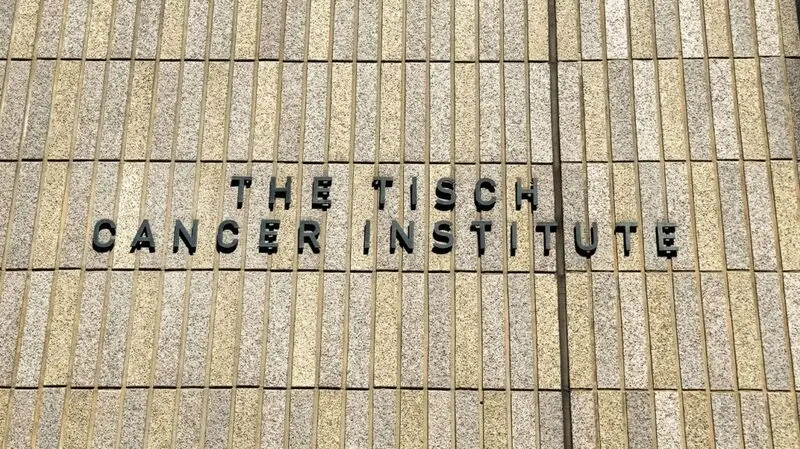
- The Mount Sinai Tisch Cancer Center (TCC) recently launched a new artificial intelligence (AI) platform to help better connect cancer patients with potential clinical trials.
According to the World Health Organization, about
While cancer treatment has grown over the last few years, still much needs to be done to further advance treatment and find cures.
One way in which researchers are able to find potential treatments for cancer is through clinical trials. A clinical trial is a type of study where people volunteer to participate and test new treatments, such as medications and vaccines, as well as surgical procedures, mental health therapies, and medical devices.
Although thousands of cancer-related clinical trials take place every year, past studies show that only about 7% of people with cancer participate in them.
There are several barriers that may cause people not to know about clinical trials they may be eligible for, including time and transportation restraints, lack of understanding of what a clinical trial is and how it works, and doctors being unaware of ongoing trials that patients may qualify for.
“We have approximately 10,000 new cancer patients seen across the Mount Sinai Health System (MSHS) per year and we only enroll <10% in clinical trials,” Karyn Goodman, MD, MS, professor and vice chair of Clinical Research in the Department of Radiation Oncology at the Icahn School of Medicine at Mount Sinai, and associate director of Clinical Research at Mount Sinai Tisch Cancer Center (TCC), told Medical News Today.
“Many patients and physicians are not aware that they might be eligible for a clinical trial.”
To help combat this problem, the TCC recently launched a new
For the last few years, AI has been increasingly used in medicine to aid doctors in the detection and diagnosis of diseases, identify potential new therapeutic candidates, make electronic health records (EHR) more accurate, and allow people to take greater responsibility for their health through the use of monitoring tools.
AI is also currently being used to help connect and match people to ongoing clinical trials. For example, in November 2024 the National Institutes of Health (NIH) developed an AI algorithm called
A perspective paper published online in December 2025 reported that cancer clinical trials may accelerate thanks to the rapid evolution of AI applications and platforms, helping with not only trial matching, but also drug design and risk assessment.
At Mount Sinai, the new AI platform called PRISM was developed by the company Triomics, and is powered by Triomics’ OncoLLM AI-driven framework designed specifically for oncology.
“The platform is an AI-enabled system that uses an oncology large language model to review records in the electronic medical record (EPIC) to accelerate the identification of eligible patients for clinical trials,” Goodman explained.
“This automated system will reduce the manual work to review patient records to find those who might be eligible for a clinical trial. (And) this will allow our physicians to have more information about potential clinical trials that are available for their patients and provide access to the most cutting edge options for their treatments.”
“Identifying patients for clinical trials has historically required manual review of oncology schedules and patient medical history, which involves substantial time and effort by our clinical research staff and yields variability in identifying trial opportunities for patients,” she continued.
“This automated system will increase clinical trial enrollment across the Mount Sinai Health System.”
Goodman said that as cancer clinical trials have led to major therapeutic advancements for cancer patients, using this AI platform to match patients to clinical trials will result in increased accruals and improved access to cutting-edge therapies for diverse populations.
“However, conducting clinical trials has many challenges and requires resources to screen for patients who might be eligible,” she continued.
“This AI platform will allow for more efficient identification of potential patients and increase the yield, thereby giving more patients access to these exciting new therapies.”
“We hope that implementation of this new platform will enhance equity and access to studies, increase participant diversity, reduce staff burden, and lower recruitment costs,” Goodman added.
“We hope to work with the company to expand the use of this platform for matching patients to other types of studies outside of oncology.”
MNT had the opportunity to speak with Nilesh Vora, MD, a board-certified medical oncologist and medical director of the MemorialCare Todd Cancer Institute at Long Beach Medical Center in Long Beach, CA, about his views on the use of AI platforms for connecting people with cancer to potential clinical trials.
Vora said that this capability is similar to what doctors already have access to through the ordering of next-generation sequencing tests where a tumor’s DNA is ascertained for its molecular features.
“And then like right below on the report you see examples of matching clinical trials to it, so this isn’t the exact same, but it’s also not a completely foreign concept,” he explained.
“Having said that, I think it’s great because this AI tool will take a patient’s age, demographic, and comorbidity situations, and probably make greater matches to clinical trials that are out there. So I think it’s a great idea.”
Vora said he believes that this kind of platform using AI would allow better access to cancer clinical trials, which may also help further cancer treatment, because as a society we don’t enroll enough people in clinical trials.
“It is a well known fact,” he continued. “And so by doing so we will be able to advance the field more — this program enables us to find more matches for patients.”
“I think this is just one less barrier for patients to get onto a clinical trial,” Vora added. “One barrier could be, well, I do not know how to find a clinical trial, or I do not know where to look. Well, this does the search for you. So one less barrier makes it so that you might be more likely to enroll more people.”