




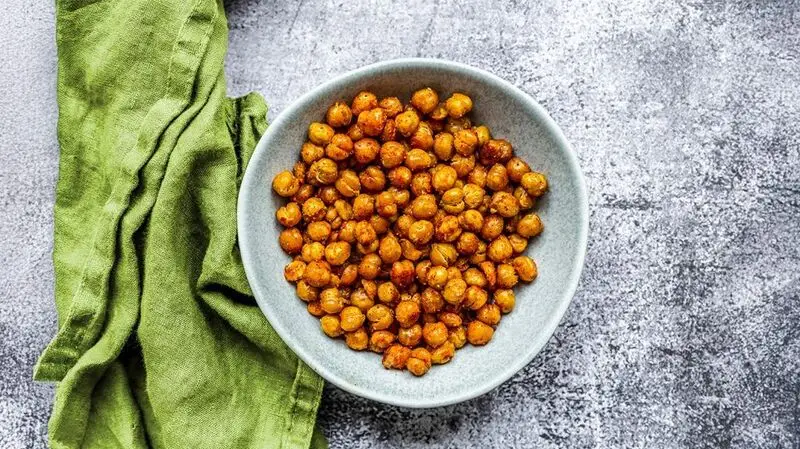
- Research suggests that phytic acid, a natural compound present in plant-based foods such as beans, lentils, nuts, seeds, and whole grains, plays a critical role in maintaining the integrity of the intestinal barrier.
- The preclinical mouse study suggests that phytic acid activates a protein that helps regulate genes involved in protecting the gut lining and prevents ‘leaky gut.’
- When this protein activity is impaired, the intestinal barrier becomes more susceptible to damage and inflammation, suggesting this pathway is essential for gut health.
- The findings identify a potential therapeutic target for conditions affecting the intestinal barrier, such as inflammatory bowel disease. However, further research is still necessary.
The intestinal lining acts as a barrier between the gut contents and the rest of the body. Typically, this barrier selectively allows nutrients to pass into the bloodstream while preventing potentially harmful substances, such as bacteria and toxins, from escaping the intestine.
When this barrier becomes compromised, harmful molecules can enter the bloodstream, potentially triggering immune responses and inflammation.
This process, often described informally as leaky gut syndrome, is associated with various digestive disorders, such as Celiac disease, inflammatory bowel disease (IBD), and irritable bowel syndrome (IBS).
Although the importance of maintaining intestinal barrier integrity has long been recognized, the exact mechanisms involved have remained incompletely understood.
Now, research suggests that a naturally occurring compound found in many plant-based foods could play an important role in maintaining the gut’s protective barrier.
The research, published in
In the study, investigators examined the role of
The researchers found that phytic acid, also known as InsP6 or phytate, directly activates HDAC3.
“HDAC3 has long been linked to health and disease, but this work is among the first to show in detail how it preserves intestinal barrier function,” study author Prasun Guha, PhD, Assistant Professor at the University of Nevada, Las Vegas (UNLV), told Medical News Today.
According to the study authors, phytic acid appears to be necessary for optimal HDAC3 function, helping preserve the gut’s protective defenses. When HDAC3 functions correctly, it helps
“In our study, we found that InsP6 (phytic acid), a very small molecule of about 10 angstroms in size, binds to the large HDAC3 and corepressor complex and is essential for turning on its deacetylase activity,” Guha explained. “This activity allows HDAC3 to repress genes that would otherwise be continuously expressed and disrupt cell-cell junctions, leading to leaky gut.”
“By acting as a metabolic cofactor InsP6 directly links cell metabolism to epigenetic control of gut barrier genes. Because InsP6 is water-soluble and orally deliverable, our animal data suggest a realistic path toward restoring lost HDAC3-mediated protection without genetic manipulation, and given HDAC3’s roles in other tissues, this InsP6-dependent regulation may have broader relevance that future studies will need to explore,” he detailed.
Impaired intestinal barrier function, or “leaky gut,” likely relates to a variety of gastrointestinal, metabolic, and autoimmune conditions. Thus, these study findings may have important clinical implications.
The researchers in UNLV’s Guha Lab suggest the result may not only identify a mechanism that contributes to gut barrier breakdown, but also indicates that the process may be reversible.
If confirmed in future human studies, therapies aiming to enhance HDAC3 activity, or deliver phytic acid-derived treatments could offer a new strategy for restoring intestinal health.
“Our animal study suggests that targeting this pathway could help conditions like IBD by not only reducing intestinal permeability but also limiting colitis-associated inflammation,” Guha told MNT.
“That said, these findings are still preclinical, so the next step is to determine the minimum effective dose in animal models and then assess safety and efficacy in clinical trials before considering patient use,” he added.
The research highlights a potentially broader connection between nutrition and disease prevention. However, while phytic acid is already present in many commonly consumed foods, the researchers caution that simply increasing dietary intake may not necessarily produce therapeutic effects.
For example, various factors such as absorption, metabolism, disease severity, and individual differences could influence how effectively phytic acid works in the body. As a result, future treatments may require targeted supplements or specially formulated medications rather than dietary changes alone.
“Phytic acid has long been called an anti-nutrient because it can bind minerals like iron, zinc, and calcium and may reduce their absorption. But that is only part of the story,” Guha emphasized.
“Our findings show that InsP6 can also act as a helpful signaling molecule. In our study, very small amounts of InsP6 were sufficient to restore HDAC3 activity, suppress harmful gene expression, and protect the gut barrier,” he noted.
“At the same time, concerns about mineral binding should not be ignored. Larger oral amounts of InsP6 may behave differently, and much of it may be broken down in the gut, including by bacteria, before reaching tissues. So what matters is dose, context, and physiology. More in vivo work is needed to understand how oral InsP6 affects mineral availability at the tissue and cell levels,” Guha said.
“Overall, our work suggests that phytic acid should not be viewed only as harmful. It is better understood as a context-dependent molecule with important biological benefits. In our animal studies, purified research grade oral InsP6 protected against intestinal permeability, but we did not test dietary forms, so these findings should not be taken as dietary or clinical advice,” he told us.
While promising, the study was conducted in preclinical animal models. Therefore, further research is needed to determine whether phytic acid-based therapies can safely improve intestinal barrier function in individuals with conditions associated with increased gut permeability before the findings can be translated into clinical treatments.
“Our findings support a more balanced view of phytic acid–rich foods, such as legumes, whole grains, seeds, and nuts. These foods may provide compounds that support gut barrier biology,” said the researcher.
“However, our study does not yet prove that ordinary dietary intake alone is sufficient to treat or prevent disease in humans. That will require carefully controlled clinical studies. At this stage, the safest conclusion is that phytic acid should not be viewed only negatively; it may be one contributor to the gut-Health benefits associated with plant-rich diets,” Guha concluded.