




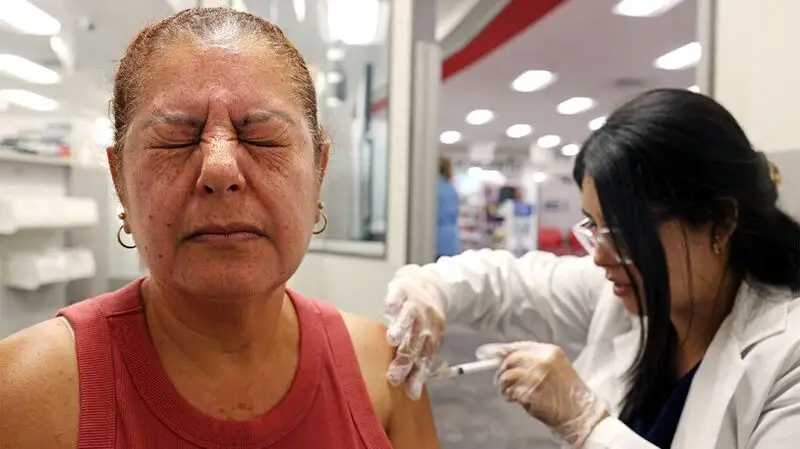
- Over the last few years, there has been more talk about how people can slow down or improve their biological age.
- Scientists are currently examining a variety of medications as a way to help slow biological aging.
- A new study says the shingles vaccine may help slow biological aging in older adults.
When a person thinks of aging, they normally think of their chronological age and how many birthdays they’ve had so far.
Over the last few years, there has been more talk about how people can slow down or improve their biological age, which is the health and function age of their bodies on a molecular level.
Previous research shows that several factors can play a role in how quickly a person biologically ages, including
“People are living longer and longer, but many spend those extra years managing chronic conditions, disability, and physical and cognitive dysfunction,” Eileen M. Crimmins, PhD, AARP, a professor of gerontology in the Leonard Davis School of Gerontology at the University of Southern California, told Medical News Today.
“Slowing biological aging could help extend not just years of life, but years of ‘healthy life’ — the years people live with better physical and cognitive function. We have shown that the only way to improve the health of the older population and increase healthy life is to intervene early — before people have diseases and disabilities. Identifying things that slow biological aging is important for understanding how we might improve population health at older ages,” Crimmins explained.
Scientists are currently examining a variety of medications as a way to help slow biological aging, such as the type 2 diabetes drug metformin, the immunosuppressant rapamycin, and
Adding to this research, a new study recently published in the Journals of Gerontology, Series A: Biological Sciences and Medical Sciences — on which Crimmins is co-author — reports that the shingles vaccine may help slow biological aging in older adults.
For this study, researchers analyzed data from the U.S. Health and Retirement Study encompassing almost 4,000 adults who were ages 70 and over in 2016.
“The shingles vaccine is relatively new and recommended for older adults,” Jung Ki Kim, PhD, research associate professor of gerontology in the Leonard Davis School of Gerontology at the University of Southern California, and first author of this study, explained to MNT.
“Prior studies have found lower risks of dementia and other age-related conditions. We wanted to understand whether it might also be associated with [the] underlying biological processes related to aging,” said Kim.
Past studies have found that the shingles vaccine may lower a person’s risk for cardiovascular issues, such as heart failure, stroke, and coronary heart disease, as well as lower overall mortality risk.
Researchers used seven different aspects of biological aging in the body to come up with participants’ composite biological aging score:
- adaptive immunity
- blood flow
- epigenetic aging
- inflammation
- innate immunity
- neurodegeneration
- transcriptomic aging
At the study’s conclusion, scientists found that participants who had received the shingles vaccine had a slower overall biological aging on average, when compared to those who did not receive the vaccination.
“This suggests that shingles vaccination may be linked not only to preventing infection and reducing its severity, but may also be more favorable to multiple biological systems, particularly inflammatory, and overall biological aging,” Crimmins said.
“While this is an observational study and cannot prove cause and effect, it adds evidence that a vaccine that affects immunity also affects biological processes that underlie multiple facets of aging biology,” she added.
Additionally, shingles vaccinated-participants had much lower inflammation measurements, slower epigenetic and transcriptomic aging, and lower composite biological aging scores, than those who were not vaccinated.
Kim explained that:
“Inflammation and molecular aging markers have been associated with many age-related health outcomes, including cardiovascular disease and cognitive decline. Finding consistent associations across these domains suggests that shingles vaccination may be linked to slower aging at a biological level, not just differences in the immune system.”
Crimmins said one possible explanation as to how the shingles vaccine might help protect a person against aging and health issues that may increase biological aging is that preventing reactivation of the shingles virus may reduce chronic, low-grade inflammation, which is a key driver of aging.
“Vaccination may also influence immune regulation and gene expression in ways that support Healthier aging,” she added.
“Our study suggests that beyond its role in preventing shingles, shingles vaccination is associated with slower biological aging in older adults,” Kim said. “These findings highlight the interaction of immune system changes due to vaccine and biological aging that may have additional positive consequences.”
“Future research should follow people over time to better understand causality, examine whether similar patterns are seen with the newer shingles vaccine, and explore whether changes in biological aging translate into meaningful health outcomes like reduced mortality or cognitive decline,” added Kim.
MNT had the opportunity to speak with David Cutler, MD, a board-certified family medicine physician at Providence Saint John’s Health Center in Santa Monica, CA, about this study.
Cutler, who was not involved in this research, commented that his first reaction to the conclusions about slowing aging was one of caution.
“There are several important limitations that temper interpretation of the association between shingles vaccination and slower biological aging,” Cutler told us.
“First, the study is observational, so it cannot establish causality; healthier individuals who choose to be vaccinated may already have slower biological aging (healthy-user bias), despite statistical adjustment. Second, residual confounding is likely, as unmeasured factors such as health-seeking behaviors, frailty trajectories, access to care, or prior immune health could influence both vaccination status and aging biomarkers,” he added.
“Third, vaccination status was based on self-report, which may introduce misclassification,” Cutler continued. “Fourth, most participants received the older live-attenuated zoster vaccine (Zostavax), limiting generalizability to the newer recombinant vaccine (Shingrix). Fifth, biological aging measures were assessed at limited time points, making it difficult to fully characterize long-term trajectories.”
“Finally,“ he added, “the cohort consisted of older U.S. adults, so results may not generalize to younger populations or other countries. Together, these limitations mean the findings are suggestive, but hypothesis-generating rather than definitive evidence that shingles vaccination slows biological aging.”
Cutler suggested several next research steps that would be especially useful for advancing efforts to slow biological aging, particularly in older adults, such as randomized and quasi-experimental studies, longitudinal tracking of aging trajectories, comparative studies across interventions, and studies with more diverse populations by age, race/ethnicity, socioeconomic status, and health status
“Together, these steps would help move the field from intriguing associations toward actionable, evidence-based strategies for slowing biological aging and improving health in later life,” he told us.